Choosing a reliable yarn twister can shape production quality, operating costs, and delivery schedules. For global textile buyers, China offers a broad manufacturing base, from compact workshop machines to automated industrial systems. This guide examines ten leading Chinese yarn twister manufacturers for international sourcing decisions.
The evaluation focuses on practical factors rather than attractive brochures. We consider twisting range, spindle speed, tension control, yarn compatibility, automation, and machine stability. Energy consumption also matters. A machine running eight hours daily can influence long-term production expenses. Buyers should examine whether a supplier supports cotton, polyester, nylon, blended, or specialty yarn applications.
Factory experience provides useful evidence. Product samples, test reports, installation records, and customer references can reveal more than sales claims. Reliable manufacturers should explain maintenance intervals, spare-part availability, operator training, and after-sales response times. Export experience is equally important, especially when buyers need compliant documentation and safe international delivery.
Still, no ranking is perfect. A supplier performing well for a large textile mill may not suit a smaller factory. Budget, floor space, electricity standards, and target yarn specifications can change the final decision. Buyers should request trial twisting before signing a purchase agreement. Small details matter. Uneven tension, noisy spindles, or difficult threading may become expensive problems later.
This overview is designed to help procurement teams compare China’s top yarn twister manufacturers with clearer expectations. It combines technical considerations, supplier credibility, and practical buying experience. Use the list as a starting point, not an automatic verdict. Careful verification remains essential.
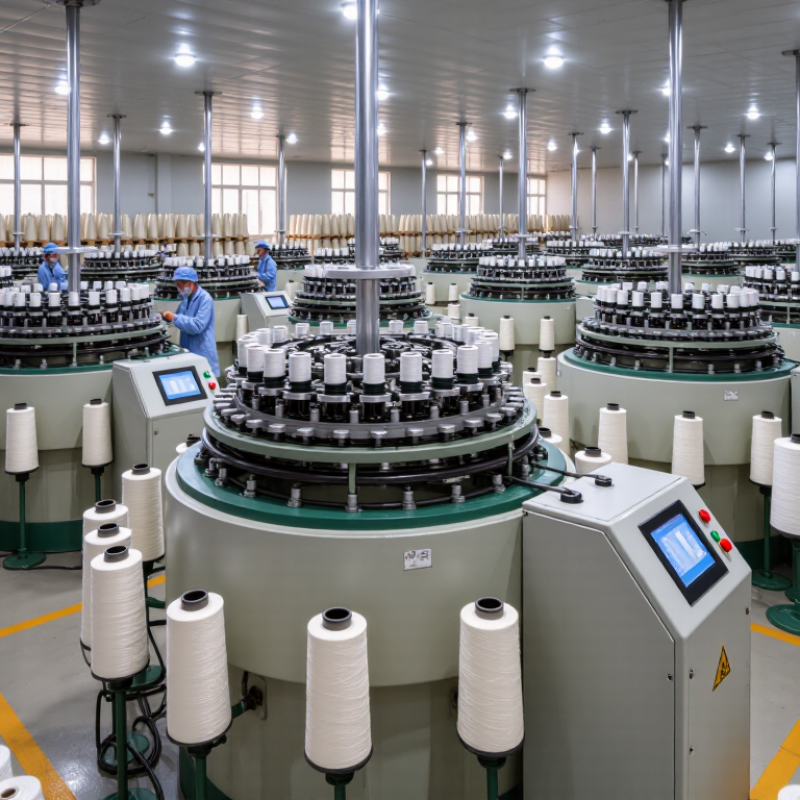
A yarn twister combines two or more single yarns and rotates them around a shared axis. This process creates plied yarn with controlled strength, balance, and surface appearance. The machine manages spindle speed, yarn tension, twist direction, and winding package quality. Small adjustments can change fabric performance.
The need is substantial. Textile Exchange’s Materials Market Report 2024 recorded 124 million tonnes of global fiber production in 2023. It projects production could reach 160 million tonnes by 2030. More fiber does not automatically mean better yarn. Global buyers must check twist consistency, tensile strength, elongation, and package density before approving a supplier. ISO 2061 provides a recognized method for measuring yarn twist, while ISO 2060 supports linear-density testing.
A well-adjusted twister helps reduce yarn breakage during weaving and knitting. It can also improve abrasion resistance and limit uneven fabric appearance. However, higher twist is not always better. Excessive twist may reduce softness or create unwanted liveliness after dyeing. That detail is easy to miss. Buyers should request production samples, test reports, maintenance records, and actual running-speed data. ITMF’s International Textile Machinery Shipment Statistics also shows how closely textile manufacturers monitor spinning-equipment investment worldwide. Reported capacity alone can mislead; operator skill, tension control, and spare-part access matter just as much. A machine may look advanced, yet perform poorly with inconsistent feed yarn.
Choosing among the top 10 yarn twister manufacturers requires more than comparing catalog prices. International buyers should examine twisting range, spindle speed, yarn compatibility, and production capacity. Ask for test results using your actual yarn count and fiber blend. A reliable manufacturer should explain tension control, energy use, maintenance intervals, and expected output under real factory conditions.
Tips: Request a video inspection or an independent factory audit. Check machine records, quality procedures, export experience, and spare-part availability. Speak with at least two recent overseas customers. Their feedback may reveal installation delays, unclear manuals, or slow technical support. These details matter more than polished sales presentations.
Evaluate the complete sourcing process. Confirm packaging standards, loading plans, payment terms, warranty coverage, and after-sales response times. Request a written specification sheet before signing any agreement. It should include motor ratings, control-system details, safety features, and acceptance-test criteria. A low quotation can become expensive after repeated downtime or unavailable components. I have seen buyers focus too heavily on initial cost. That choice is understandable, but incomplete. A short production trial can expose vibration, uneven twisting, or operator difficulties. Also review the manufacturer’s engineering team and training plan. Practical knowledge is often visible in small details, such as accessible lubrication points and clearly labeled electrical cabinets.
China’s top ten yarn twister manufacturers are best compared by product strengths, not visibility alone. One group focuses on high-speed twisting for polyester, nylon, and technical yarns. Another builds compact machines for small and medium spinning mills. Their equipment often includes servo drives, touch-screen controls, and automatic yarn-break detection.
Some manufacturers specialize in two-for-one twisters, which can reduce processing time and floor space. Others develop ring twisters for delicate fibers, where tension control matters more than speed. Several suppliers offer machines for carpet yarn, sewing thread, industrial cord, or blended fibers. Customized spindle counts and winding widths can help buyers match existing production lines. Practical details matter. Ask about power consumption, spare-part access, noise levels, and operator training.
A reliable factory should provide test reports, installation guidance, and clear maintenance schedules. Factory visits can reveal assembly discipline, calibration practices, and actual running conditions. Ask to inspect yarn samples produced on the proposed machine. Good documentation is useful.
Still, no supplier leads every category. A fast machine may create more waste with unstable yarn. A low-cost model may need frequent adjustment. My own review would leave room for this uncertainty. Buyers should compare output consistency over several shifts, rather than trust a single demonstration. Local service capability also deserves careful attention, especially when production stops unexpectedly.
China’s top ten yarn twister manufacturers serve different production priorities, so global buyers should compare capabilities rather than rely on rankings. Some specialize in two-for-one twisting machines for cotton, polyester, viscose, and blended yarns. Others focus on precision twisting for sewing threads, embroidery yarns, carpet yarns, and technical textiles. A serious supplier should provide verifiable test data, factory videos, spare-parts information, and installation support.
Their key technologies include servo-driven spindle control, touchscreen operating systems, automatic yarn break detection, and programmable twisting parameters. Several manufacturers offer energy-saving motors and centralized lubrication, which can reduce heat and maintenance demands. Advanced models support high-speed operation with stable tension control. This matters in apparel mills, home-textile factories, automotive interiors, medical fabrics, and industrial filtration production. Some lines also connect with factory monitoring software, although system compatibility can be inconsistent.
Experienced buyers should inspect spindle quality, noise levels, vibration control, and yarn handling during a live trial. Ask whether the machine performs equally well with fine yarn and heavier industrial counts. Not every supplier reports efficiency under real factory conditions. That is a weakness worth challenging. A reliable manufacturer explains output limits clearly, instead of promising maximum speed alone. Local service networks, operator training, delivery records, and documented quality checks also reveal practical credibility. The best choice may be the machine with simpler maintenance, not the most impressive specification sheet.
| Profile | Manufacturing Base | Typical Twisting Capability | Core Technologies | Automation and Quality Features | Main Industries Served | Buyer Suitability |
|---|---|---|---|---|---|---|
| 01 | Eastern China | Multi-spindle systems for filament, sewing, embroidery, and industrial yarns; low-to-medium twist applications. | Ring twisting, two-for-one twisting, adjustable spindle speed, electronic yarn monitoring. | PLC control, touch-screen settings, automatic stop sensors, programmable production recipes. | Apparel, home textiles, embroidery, sewing thread, narrow fabrics. | High-volume buyers seeking broad machine configuration options and competitive operating costs. |
| 02 | South China | Compact twisters for polyester, nylon, rayon, and blended filament yarns; fine to medium counts. | Two-for-one twisting, tension compensation, precision winding, modular spindle layouts. | Digital tension control, yarn-break detection, centralized lubrication, production data displays. | Sportswear, lingerie, footwear textiles, decorative fabrics, technical narrow goods. | Factories requiring flexible equipment for frequent style and material changes. |
| 03 | Central China | Heavy-duty twisting configurations for spun yarns, blended yarns, and selected technical yarns. | Spindle twisting, large-package winding, reinforced drive systems, configurable take-up units. | Variable-frequency drives, overload protection, automatic fault alarms, accessible maintenance design. | Industrial fabrics, geotextiles, workwear, upholstery, carpet yarn preparation. | Users prioritizing robust construction, long running hours, and heavier yarn packages. |
| 04 | Northern China | High-speed two-for-one twisting for synthetic filament and blended yarn production. | Aerodynamic spindle design, electronic yarn tension control, high-speed package formation. | Automatic tension correction, centralized monitoring, digital parameter storage, safety interlocks. | Knitting yarns, woven fabrics, home furnishings, automotive interior textiles. | Mills focused on productivity, repeatable twist levels, and reduced manual intervention. |
| 05 | Yangtze River Delta | Precision twisting for fine-count yarns, sewing threads, embroidery yarns, and specialty filaments. | Fine-yarn tension control, precision traverse, anti-ballooning components, low-vibration spindle assemblies. | Servo drives, closed-loop tension feedback, defect monitoring, recipe-based changeover. | Premium apparel, embroidery, sewing, lace, ribbons, and high-value decorative textiles. | Buyers requiring consistent appearance, low hairiness, and controlled package density. |
| 06 | Coastal China | Customized machines for elastic-covered yarns, core-spun yarns, and combined twisting processes. | Covering attachments, dual-feed systems, synchronized delivery, application-specific winding. | Electronic synchronization, break detection, operator alarms, quick-access process adjustments. | Stretch fabrics, socks, medical textiles, swimwear, sportswear, elastic tapes. | Specialty-yarn producers needing application-specific feeding and covering solutions. |
| 07 | Southwest China | General-purpose twisting lines for cotton, polyester-cotton, viscose, and regenerated-fiber yarns. | Ring twisting, multi-ply twisting, adjustable winding tension, interchangeable yarn guides. | Basic PLC automation, spindle-level stop detection, digital speed adjustment, simplified maintenance. | Basic apparel fabrics, towels, household textiles, uniforms, and general weaving. | Small and medium-sized mills seeking straightforward operation and accessible servicing. |
| 08 | Pearl River Manufacturing Cluster | High-flexibility equipment for mixed production, including filament, spun, and recycled-fiber yarns. | Modular spindle banks, variable twist settings, adaptable yarn paths, quick-change components. | Touch-screen HMI, digital counters, automatic stop functions, remote troubleshooting readiness. | Fast-fashion fabrics, recycled textiles, knitwear, accessories, and small-batch production. | Contract manufacturers that need short setup times and diversified product capability. |
| 09 | Eastern Coastal Export Cluster | Export-oriented twister packages for medium and large spinning or weaving plants. | Two-for-one twisting, automatic doffing options, energy-efficient motors, optimized air management. | Production monitoring, alarm history, energy-conscious drive selection, standardized safety systems. | Export apparel, bedding, curtains, upholstery, and industrial sewing supplies. | International buyers comparing total cost of ownership, documentation, and installation support. |
| 10 | Specialized Textile Machinery Zone | Engineered-to-order systems for technical, coated, conductive, high-strength, and multi-component yarns. | Customized yarn paths, multi-component feeding, precision tension control, application-specific winding. | Integrated PLC systems, recipe management, process traceability, customized inspection points. | Filtration, medical products, protective textiles, composites, automotive, and aerospace-related textiles. | Technical-textile manufacturers requiring process engineering and customized integration. |
| Buyer note: Actual twist range, spindle speed, yarn count, package size, energy consumption, automation level, and production capacity vary by machine configuration and material. Buyers should verify technical specifications, sample results, certifications, spare-parts support, and factory references before purchasing. | ||||||
When comparing yarn twister manufacturers, do not judge the lowest quotation first. ITMF’s International Textile Machinery Shipment Statistics 2023 reported 8.61 million short-staple spindles shipped globally. This signals strong investment, but it does not prove twisting performance. Ask each supplier for trial results, twist accuracy, output speed, power consumption, and spare-part prices. A machine running beside your existing line reveals more than a polished brochure.
Compare landed cost, not only the factory price. Use UN Comtrade 2023 records to review import values for relevant textile machinery categories. Then separate FOB, CIF, installation, training, insurance, and local taxes. A cheaper machine may need expensive control components later. It happens. Request a five-year total-cost sheet with identical production assumptions. Check whether quoted capacity is theoretical or measured with your yarn count and fiber blend.
Export support deserves equal weight. The World Bank Logistics Performance Index 2023 assesses customs, infrastructure, logistics competence, tracking, and delivery timeliness. Buyers should test these areas directly. Request export references, packing photographs, documentation samples, remote troubleshooting procedures, and response-time commitments. Confirm warranty exclusions in writing. Ask for a video factory acceptance test using your material. A few suppliers may resist. That is useful information. Price comparisons remain imperfect when electricity rates, labor, yarn quality, and maintenance skills differ. A disciplined buyer records these variables before ranking suppliers.