China Top 10 Warp Thread Manufacturers for Global Buyers examines a supply chain where small technical differences create major production costs. A weaving line may run thousands of meters per minute. One weak cone can cause repeated stops, broken ends, and visible fabric defects. Buyers therefore need more than export volume or attractive quotations.
The Textile Exchange Materials Market Report 2024 estimates that global fiber production reached 124 million tonnes in 2023. It could approach 160 million tonnes by 2030. This growth increases demand for reliable, traceable, and resource-efficient warp thread. The International Textile Machinery Federation also reported continued investment in spinning and weaving equipment, especially across Asian manufacturing centers. These trends make supplier capability increasingly important.
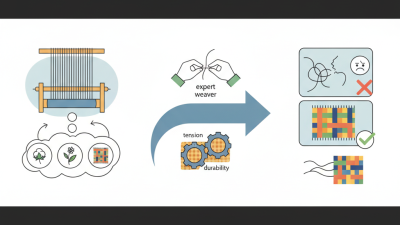
Textile materials expert Dr. Seshadri Ramkumar has stated, “Textile innovation must combine performance, affordability, and sustainability.” That principle applies directly to warp thread selection. A serious comparison should examine tensile strength, elongation, sizing quality, package consistency, moisture control, and technical support. Certifications matter, but they do not replace factory evidence or sample testing.
No ranking is perfect. Product quality may vary between lots, machines, and customer specifications. Global buyers should request recent test reports, production samples, audit information, and clear delivery records. A supplier that communicates quickly can be more valuable than one offering the lowest price. This guide highlights ten Chinese manufacturers for practical evaluation, while recognizing that final approval belongs beside the loom, under real production conditions.
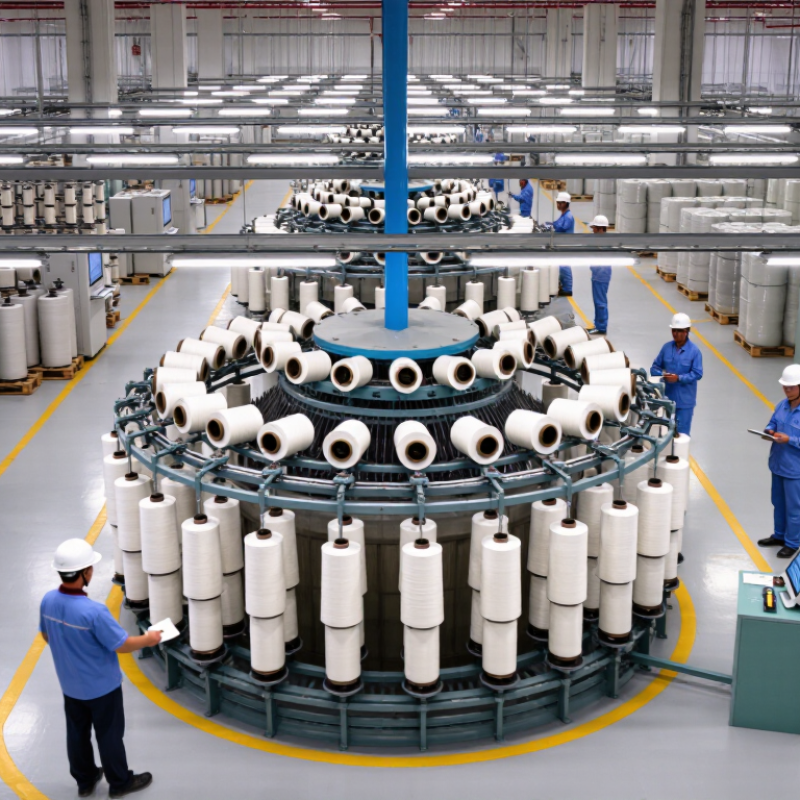
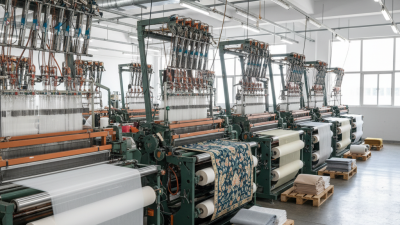
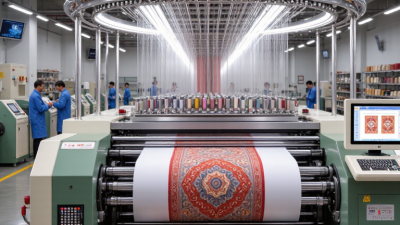
Warp thread is the yarn placed lengthwise on a loom. It runs through the fabric’s entire structure, from the beam to the finished edge. During weaving, it faces repeated tension, friction, and sudden movement. This makes its strength especially important in global textile production.
A reliable warp thread usually offers consistent thickness, controlled stretch, and suitable abrasion resistance. Cotton, polyester, viscose, and blended fibers can serve different production needs. The right choice depends on fabric weight, loom speed, humidity, and finishing requirements.
In factory inspections, uneven yarn often appears as broken ends, thin lines, or visible streaks. These small defects can delay production and increase waste. However, strength alone does not guarantee good fabric. A very strong yarn may still create stiffness or poor surface comfort. This point is sometimes overlooked.
Tips: Check tensile strength, elongation, twist, and package quality before bulk weaving. Ask for test records from recent production batches. Store yarn in a clean, dry area, away from direct sunlight. Letting materials adjust to the weaving room can reduce sudden tension changes. Keep samples.
Buyers should also compare performance after sizing, because sizing chemicals can change handling and breakage rates. Trial weaving provides more useful evidence than a technical sheet alone. I have seen specifications look excellent, yet small loom trials reveal excessive fuzz or unstable tension. That is why practical testing remains essential when evaluating Chinese warp thread manufacturers.
China’s top ten warp thread manufacturers should be evaluated beyond catalogue claims. Textile Exchange’s Materials Market Report 2024 estimates global fibre production reached 124 million tonnes in 2023. This scale increases pressure on quality, traceability, and delivery consistency. Ask each manufacturer for recent test records, not selected samples.
Check tensile strength, elongation, twist, hairiness, and package density. ISO 2062 provides a recognised method for yarn tensile testing. Request results from different production lots. A factory that only submits one perfect cone deserves caution. Compare laboratory results with your own incoming inspection. Small differences can cause broken ends, uneven tension, and stoppages on high-speed looms.
Production evidence matters too. Review monthly capacity, machine age, maintenance logs, and dye-lot controls. Confirm whether the stated capacity includes subcontracted output. That detail is often unclear. The International Textile Manufacturers Federation has repeatedly identified weak demand and supply-chain uncertainty as major industry pressures in its global surveys. Therefore, assess backup raw-material sources and shipment recovery plans. Verify certificates directly with issuing bodies, and check whether recycled or certified inputs match purchase documents. A supplier may pass an audit yet miss delivery windows. Build a trial order with measurable acceptance limits, including cone weight, moisture, strength variation, and defect rates. Use written corrective-action records. Trust should be earned in production, not promised during a video call.
| No. | Evaluation Dimension | What International Buyers Should Verify | Practical Benchmark or Requirement | Recommended Evidence | Common Risk Signal |
|---|---|---|---|---|---|
| 1 | Product Range | Confirm whether the supplier produces the required warp thread construction, including spun or filament yarn, material type, count, denier, twist, color, and finishing. | The product specification should match the buyer’s loom, weaving process, fabric structure, and downstream performance requirements. | Technical data sheet, yarn construction details, sample cones, and a signed specification sheet. | Vague specifications or samples that do not match the quotation. |
| 2 | Raw-Material Traceability | Check how the supplier identifies and controls incoming fibers, filaments, masterbatch, lubricants, dyes, and other production inputs. | Each production lot should be traceable from raw material receipt through winding, inspection, packing, and shipment. | Lot-number procedure, batch records, supplier declarations, and retained-sample policy. | No lot identification or inability to provide batch records. |
| 3 | Quality-Control System | Evaluate control of linear density, tensile strength, elongation, twist, evenness, hairiness, knots, oil content, and package build. | Acceptance limits must be agreed in writing before mass production, with test methods and sampling frequency defined. | Inspection plan, calibrated equipment list, laboratory reports, and pre-shipment inspection records. | Only visual inspection or test results without defined tolerances. |
| 4 | Weaving Performance | Ask for evidence that the thread can withstand sizing, warping, drawing-in, loom tension, abrasion, and repeated mechanical stress. | Run a controlled weaving trial using the buyer’s machine settings and record breaks, defects, stoppages, and fabric appearance. | Trial report, loom settings, fabric sample, breakage log, and approval record. | Supplier provides only laboratory data with no weaving-trial evidence. |
| 5 | Color and Shade Control | Verify shade approval, color consistency between lots, lightfastness requirements, and the measurement system used for dyed or colored thread. | Use an approved master standard, documented color tolerances, and lot-to-lot shade comparison before shipment. | Color approval card, laboratory dip, spectrophotometer report, and retained production sample. | Color approval based only on photographs or verbal confirmation. |
| 6 | Chemical and Regulatory Compliance | Determine whether the product and processing chemicals meet the destination market’s textile chemical requirements. | For European sales, request evidence addressing applicable REACH obligations; when specified, obtain testing against a recognized restricted-substance standard such as OEKO-TEX Standard 100. | Current third-party test report, restricted-substance declaration, chemical inventory, and product compliance statement. | Expired certificates, unclear scope, or reports for a different product. |
| 7 | Production Capacity and Continuity | Assess monthly capacity, machine availability, peak-season planning, maintenance procedures, and backup arrangements for critical processes. | Capacity commitments should be supported by production records and should include a realistic lead-time plan for repeat orders. | Factory audit, capacity statement, production schedule, maintenance records, and business-continuity plan. | Capacity claims that cannot be supported by equipment or production records. |
| 8 | Packaging and Export Readiness | Confirm cone weight, winding direction, carton configuration, moisture protection, palletization, labeling, and export documentation. | Packing details must protect thread during long-distance transport and clearly identify item, color, lot, quantity, net weight, and gross weight. | Packing specification, carton photos, sample shipping marks, commercial invoice, packing list, and certificate-of-origin process. | Inconsistent labels, weak moisture protection, or incomplete export paperwork. |
| 9 | Commercial Terms and Total Cost | Compare material price, dyeing or finishing charges, minimum order quantity, tooling or sampling fees, payment terms, freight basis, and claim handling. | Evaluate landed cost rather than unit price alone, including inspection, transport, duties, rejects, rework, and inventory exposure. | Formal quotation, pro forma invoice, Incoterms® agreement, payment terms, and written quality-claim procedure. | Unusually low pricing with unclear specifications or hidden surcharges. |
| 10 | Auditability and Communication | Check legal-entity information, factory location, audit access, response speed, engineering support, corrective-action capability, and language coverage. | A reliable supplier should provide consistent documents, respond within agreed timelines, and close corrective actions with verifiable evidence. | Business registration, factory audit report, organizational contacts, corrective-action report, and signed supplier questionnaire. | Trading-party and factory details do not match, or audit access is refused. |
| Buyer note: The benchmarks above are sourcing checkpoints rather than rankings of named companies. Final approval should be based on a documented sample evaluation, a production trial, destination-market compliance requirements, and an independent pre-shipment inspection where appropriate. | |||||
China’s top 10 warp thread manufacturers serve different industrial needs. Profile 1 focuses on integrated spinning and weaving. Profile 2 specializes in high-tenacity polyester. Profile 3 supplies recycled filament yarn. Profile 4 targets denim and workwear producers. Profile 5 offers low-shrinkage thread for technical fabrics. Profile 6 develops solution-dyed options. Profile 7 emphasizes certified recycled inputs. Profile 8 supports small, flexible order volumes. Profile 9 produces fine-count yarn for apparel. Profile 10 combines laboratory testing with export support.
These profiles reflect China’s manufacturing scale. The WTO World Trade Statistical Review 2023 recorded China’s textile exports at about US$323 billion in 2022. The International Textile Manufacturers Federation also reported continuing investment in automation and digital quality control. For buyers, this means capacity is not the only concern. Twist consistency, elongation, tensile strength, and package density can affect production speed. A supplier may look excellent on paper. Real samples can disagree.
Tips: Request a recent test report and a 500-gram sample cone. Check strength after dyeing, not only before dyeing. Ask for batch traceability and production lead time. Confirm whether recycled content has independent certification. Small details matter. One weakness remains: public rankings rarely compare all ten manufacturers using identical criteria. Buyers should therefore verify factory audits, test methods, and complaint records before signing contracts. Rechecking supplier claims is practical, not distrustful.
Profiles of China’s Top 10 Warp Thread Manufacturers
This comparison uses commercially common polyester warp-thread specification bands. Linear density is shown in denier, while tenacity represents the typical strength range used for industrial and apparel warp applications. Company and brand names are intentionally omitted.
Comparing Product Quality, Capacity, Certifications, and Export Services
A reliable warp thread manufacturer should prove performance, not merely present attractive samples. Check denier consistency, tensile strength, elongation, winding density, and surface cleanliness. During factory visits, inspect cartons, moisture controls, and production records. Small differences can disrupt weaving speed.
Capacity also needs practical verification. Ask about monthly output, machine numbers, maintenance schedules, and backup production lines. A large stated capacity may not reflect available capacity during peak seasons. Review certificates for quality systems, product safety, environmental management, and social responsibility. Confirm issuing bodies and expiry dates independently.
Tips: Request three production samples from different batches. Test them under your actual loom settings. Compare breakage rates, dyeing results, and delivery timing. Export support matters too. Evaluate technical communication, packaging strength, labeling accuracy, customs documents, and after-sales response. A clear quotation should include specifications, tolerances, payment terms, lead time, and inspection procedures. I once trusted a low price before checking winding uniformity; the later rework cost more than expected. That mistake still shapes my supplier audits. No ranking stays perfect. Buyer requirements change by fabric type, destination, and order volume.
Global buyers need more than a low quotation when choosing a Chinese warp thread supplier. The right partner must match fiber type, twist, denier, strength, elongation, and loom speed. Ask for a technical data sheet and a recent production sample. Test both under real weaving conditions. A thread can look smooth yet break during tension changes.
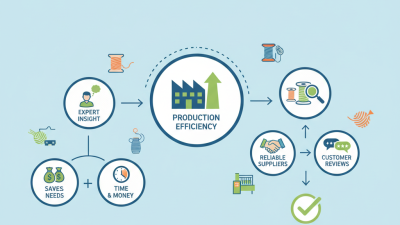
Reliable evaluation begins with evidence. Request batch traceability, inspection records, and clear tolerances for each shipment. An experienced supplier should explain sizing, winding precision, moisture control, and storage conditions without vague promises. Check whether its laboratory uses calibrated instruments and links results to lot numbers. For export orders, confirm packaging, lead time, loading protection, and document accuracy before signing. Independent factory audits may reveal weak process controls that polished samples hide.
Communication is equally practical. Send written specifications, including color code, cone weight, core size, and defect limits. Measure response quality, not just speed. A capable team asks about machine settings and production climate. It should report delays early and suggest workable adjustments. Do not rely on one successful sample. Run a pilot order across several lots, then compare breakage, hairiness, and beam uniformity. My own mistake was accepting consistent test data without checking carton labels; the warehouse later needed extra sorting. That small oversight showed why supplier selection needs factory evidence, not confidence alone.