Why Choose a Weaving Loom Machine for Your Business Needs?
In today’s competitive market, choosing the right tools for your business is crucial. A weaving loom machine stands out as an essential asset for textile production. This equipment not only enhances your operational efficiency but also opens doors to creative fabric designs. Investing in a weaving loom machine can elevate your business, allowing you to meet diverse client demands.
The versatility of a weaving loom machine is impressive. It can produce various fabric types, adapting to the latest design trends. This adaptability is vital in a fast-changing industry. However, selecting a loom that suits your specific needs is not easy. Various models and functionalities require careful consideration. A well-informed choice can significantly impact productivity and creativity in your projects.
While a weaving loom machine offers many benefits, it comes with challenges. Initial costs can be high, and maintenance may require expertise. Regular assessments of your equipment's efficiency are necessary to ensure optimal performance. Understanding these aspects can help you make a balanced decision and reinforce your business's foothold in the textile market.
Understanding Weaving Loom Machines and Their Functionality
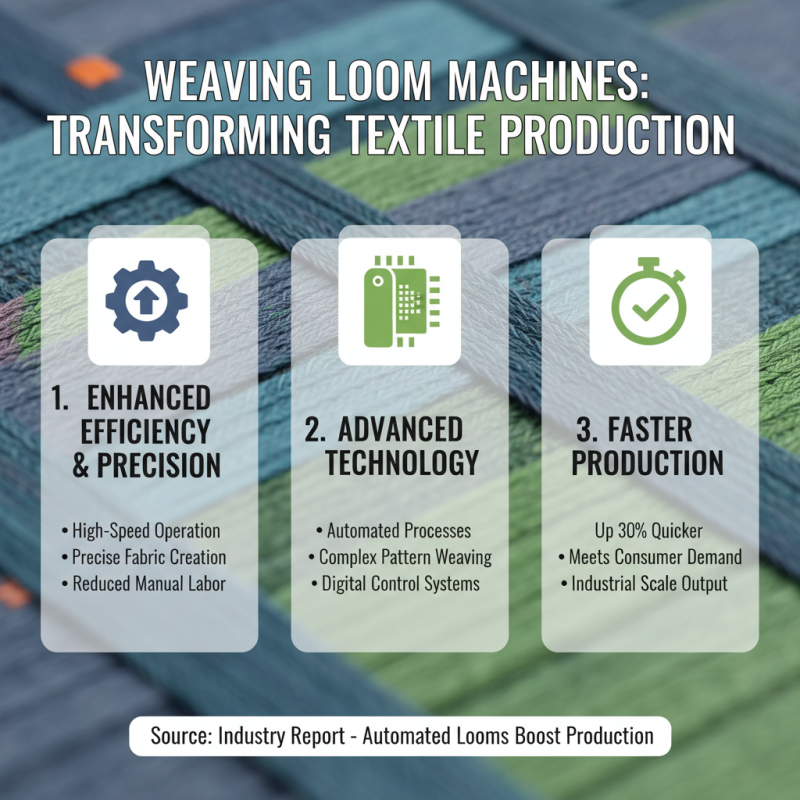
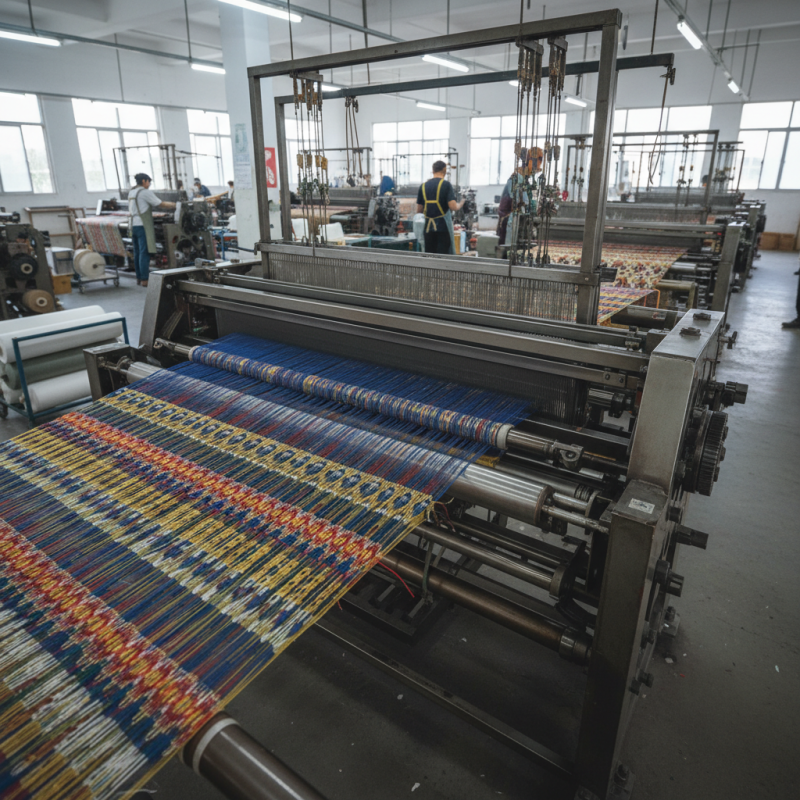
Weaving loom machines have transformed the textile industry. They enhance production efficiency and precision in fabric creation. With advanced technology, these machines can operate at high speeds, weaving complex patterns with ease. According to a recent industry report, automated looms can produce fabrics up to 30% faster than traditional methods. This speed is crucial for businesses aiming to meet increasing consumer demands.
These machines offer flexibility that manual weaving cannot. Operators can adjust settings quickly, tailoring output to specific client needs. This adaptability is especially valuable in custom fabric orders. A survey from Textile World reveals that businesses with automated looms see a 20% rise in customer satisfaction. This is due to reduced lead times and improved product quality.
However, investing in weaving loom machines requires careful consideration. Initial costs can be high. Additionally, businesses must train staff to operate new technology effectively. There is a learning curve involved. Reports suggest that about 25% of organizations face challenges during the transition. Evaluating the long-term benefits against initial hurdles is essential for informed decision-making.
Key Benefits of Using Weaving Loom Machines in Business Operations
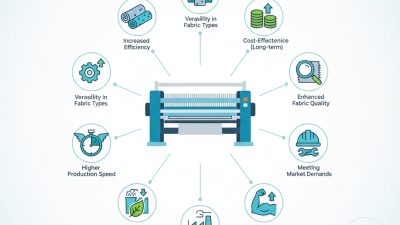
Investing in a weaving loom machine can transform business operations. These machines enhance productivity and consistency in textile production. Businesses often find themselves under pressure to meet growing demands. A loom machine can help. It enables quicker fabric creation without compromising quality.
One key benefit is precision. Weaving machines create intricate patterns and designs with ease. This level of detail can surpass handmade alternatives. However, operator skills are still important. Poor training can lead to errors. Regular maintenance is essential as well. Breakdowns can disrupt production schedules.
Using weaving machines can also improve material efficiency. They minimize waste compared to manual methods. This approach can save costs in the long run. Yet, there are challenges. The initial investment can be high. Businesses must weigh these costs against potential savings. Investing in training is another critical consideration for optimizing loom performance.
Why Choose a Weaving Loom Machine for Your Business Needs? - Key Benefits of Using Weaving Loom Machines in Business Operations
| Benefit |
Description |
Impact on Business |
| Increased Efficiency |
Weaving loom machines automate the weaving process, reducing manual labor and time. |
Higher production rates and lower operational costs. |
| Consistent Quality |
Machines ensure consistent tension and weave pattern, enhancing fabric quality. |
Improved customer satisfaction and reduced returns. |
| Variety of Fabrics |
Advanced machines can produce a wide range of fabrics and patterns. |
Increased market reach and adaptability to trends. |
| Reduced Waste |
Precision in material usage minimizes fabric waste during production. |
Lower costs and improved sustainability. |
| Flexibility in Production |
Ability to quickly switch between different types of fabrics and designs. |
Faster response time to market demands. |
Factors to Consider When Choosing a Weaving Loom Machine
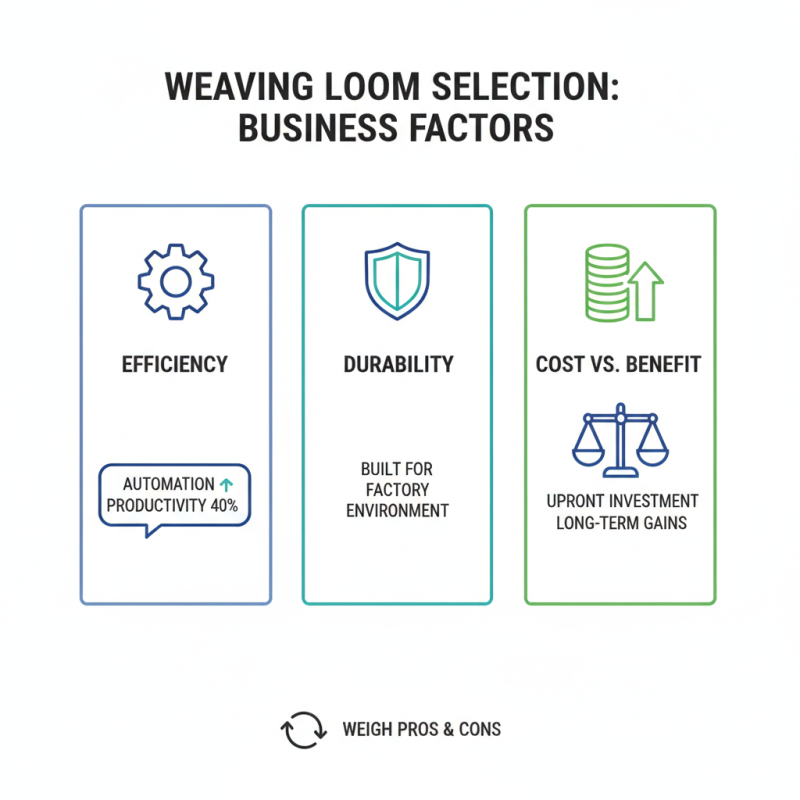
When selecting a weaving loom machine for business, efficiency and durability matter most. Industry reports show that machines with high automation can increase productivity by up to 40%. However, advanced features often come at a higher cost. It’s crucial to weigh upfront investment against long-term benefits. Some machines might seem perfect on paper but fail to meet factory environment needs.
Material compatibility also plays a vital role. Certain looms handle thicker yarns better, while others excel with delicate fibers. According to textile manufacturing data, optimizing for the intended fabric type reduces waste by 15%. Ignoring this can lead to quality issues and increased repair frequency. This detail is often overlooked but critical for consistent output.
Operator skill level is another practical consideration. Complex machines require trained staff. Without proper expertise, downtime can rise unexpectedly. Training programs increase reliability but add overhead. Balancing machine capability and workforce readiness is tricky. Sometimes simpler looms provide better ROI, even if they seem less advanced initially.
Comparison of Different Types of Weaving Loom Machines
When selecting a weaving loom machine, understanding the different types is crucial for meeting business needs. The market offers several options: traditional hand looms, Jacquard looms, and automatic weaving machines. Each type has unique capabilities and applications. According to industry reports, automatic looms have increased productivity by up to 30%. This efficiency can significantly impact manufacturing costs.
Traditional hand looms require skilled labor and are best for artisanal products. They can produce high-quality fabrics but at a slower pace. Jacquard looms offer versatility and intricate patterns, making them ideal for specialty textiles. However, they require a higher initial investment. Recent studies indicate that businesses focusing on sustainable practices tend to prefer hand looms despite the loss in speed.
Automatic machines dominate the market, accounting for nearly 60% of all sales. They streamline processes and reduce labor costs. However, the reliance on technology brings challenges, such as machine maintenance and operator training. As businesses weigh their options, factors like production volume, fabric type, and cost efficiency must be considered. Exploring these aspects reveals both the advantages and pitfalls of each loom type.
Comparison of Different Types of Weaving Loom Machines
Tips for Maintaining Weaving Loom Machines for Optimal Performance
Maintaining weaving loom machines is essential for optimal performance. Regular upkeep ensures these machines operate smoothly, minimizing downtime. Cleaning the loom after each use is a basic yet crucial step. Dust and lint can build up and affect the weaving process. Lubricating moving parts regularly extends the machine's life and improves efficiency. Use recommended oils sparingly to avoid attracting more dust.
Check for signs of wear and tear periodically. Inspect the belts and gears closely. Replace any damaged parts immediately. Ignoring small issues can lead to larger complications later. Training your staff on these maintenance practices fosters a proactive approach.
Moreover, keep an eye on the machine’s tension settings. Incorrect tension can lead to fabric defects. Test the loom with various materials to assess its performance. Also, document maintenance routines to track what works best. This reflection helps refine your practices over time. Remember, consistent maintenance is not a one-time job; it requires ongoing attention and care.