Poly Net Fabric appears in gardens, sports equipment, packaging, filtration, and outdoor products. Its lightweight structure can provide airflow, separation, support, or surface protection. Yet, not every mesh performs the same way. The fiber arrangement, opening size, coating, and production method can change its strength and flexibility.
Common choices include knitted poly net fabric, woven polyester mesh, extruded plastic netting, and Raschel net fabric. Knitted mesh usually bends easily around curved surfaces, making it useful for bags, covers, and breathable panels. Woven mesh offers more stable openings and can suit screens, filters, or reinforced industrial applications. Extruded netting often provides practical strength with consistent patterns. Raschel netting may deliver useful shade, ventilation, and lightweight coverage.
Small details matter.
A fabric sample may feel strong in dry conditions but stretch after repeated handling. Sun exposure, moisture, cleaning chemicals, and edge finishing can also affect service life. This is where product specifications and testing become essential. Buyers should compare material composition, mesh dimensions, tensile performance, UV resistance, and intended use. A low-cost option may not remain economical if it needs frequent replacement.
This guide examines the top types of Poly Net Fabric and explains their typical advantages, limitations, and applications. It also considers how texture, openness, and finishing influence real-world performance. No single mesh is ideal for every project. That point is easy to overlook. Careful selection begins with understanding the environment, not just the fabric name.
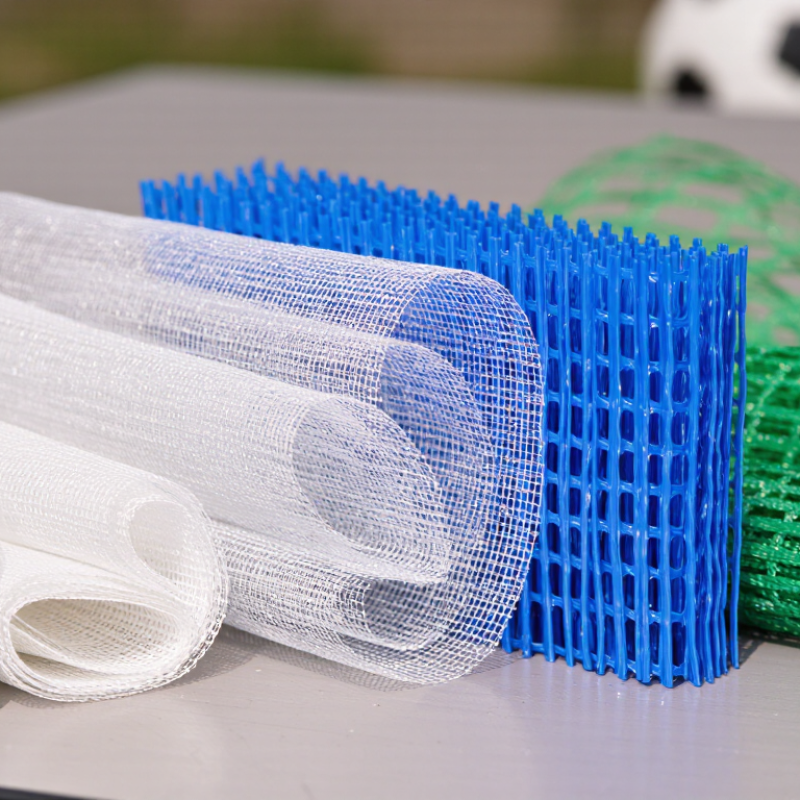
Poly net fabric is a flexible mesh material made from synthetic polymer yarns. The term is not perfectly standardized. In practice, suppliers may use it for polyethylene, polypropylene, or polyester netting. Each polymer changes the fabric’s strength, weight, softness, and resistance to moisture.
Manufacturing usually begins with polymer pellets. Heat melts the pellets into narrow strands or flat tapes. These strands are stretched to improve tensile strength. Machines then knit, weave, or extrude them into an open grid. The mesh size may range from tiny openings for filtration to wide gaps for ventilation.
Some fabrics receive UV stabilizers, color pigments, or protective coatings. These treatments can improve outdoor performance, but they may also affect flexibility and recycling options.
Common types include agricultural netting, shade mesh, sports netting, cargo net fabric, and decorative mesh. Agricultural versions often use lightweight polyethylene because it handles rain and repeated handling. Shade mesh uses controlled openings to reduce sunlight and air movement. Sports netting usually requires thicker yarns and reinforced edges. Polyester mesh can offer a cleaner surface and stable dimensions, although it may cost more. Polypropylene is light and buoyant, but prolonged sunlight can weaken it without suitable stabilization.
I have found that mesh labels alone can be misleading. A strong-looking fabric may still tear at an unreinforced seam. Checking yarn thickness, opening size, edge construction, and UV test data gives a more reliable assessment.
Woven and knitted poly net fabrics serve different performance needs. Woven poly net is built from straight warp and weft yarns crossing at fixed angles. This structure creates stable openings, firm edges, and reliable dimensions. It suits filtration screens, protective panels, storage bags, and outdoor partitions. Woven fabric usually resists abrasion well, but it may feel stiff and offer limited stretch.
Knitted poly net is formed from interlocking yarn loops. The loops give it flexibility, softness, and better recovery after bending. This makes knitted net useful for sports panels, breathable covers, produce bags, and lightweight shade applications. It can follow curved surfaces more easily. However, its openings may distort under tension, and a cut edge can unravel. Neither construction is automatically better. Selection depends on load, movement, airflow, and exposure. A common mistake is choosing by appearance alone.
Tips: Hold a sample against light and measure the opening size. Stretch it in both directions. Check whether the fabric returns to shape. For outdoor use, ask about UV resistance, yarn thickness, and coating details. A small trial panel can reveal problems that a specification sheet misses. Even experienced buyers sometimes overlook seam behavior, especially when knitted net is stitched under strong tension.
Poly net fabric is not one uniform material. The main types are polyethylene, polypropylene, and polyester netting. Each responds differently to sunlight, moisture, tension, and repeated handling. The best choice depends on the working environment, not just mesh appearance. This point is easy to miss.
Polyethylene net fabric is lightweight, flexible, and suitable for temporary covers, protective barriers, and agricultural applications. Polypropylene netting offers low moisture absorption and useful resistance to many chemicals. However, prolonged sunlight can weaken it without proper stabilization. Polyester net fabric usually provides higher tensile strength, better dimensional stability, and stronger abrasion resistance. It often suits safety screens, industrial separation, and long-term outdoor use. It can still become stiff or damaged when exposed to unsuitable chemicals.
Construction also creates important differences. Knitted poly net fabric stretches easily and handles curved surfaces well. Woven netting keeps a more stable shape under steady tension. Extruded netting is often economical and consistent, but it may feel less flexible. Monofilament yarns create firm openings, while multifilament yarns provide a softer surface. No single type wins everywhere. A practical assessment should check mesh size, yarn thickness, UV treatment, edge strength, and cleaning requirements. A small sample test is wiser than relying on appearance alone. Even experienced buyers can overlook how quickly dust, heat, and tension alter performance.
Choosing poly net fabric starts with the working environment, not appearance.
Polyethylene netting suits agricultural shade cloth, windbreaks, and temporary site screening because it resists moisture and handles outdoor exposure well. Its knitted structure can flex around posts without fraying quickly.
For crop protection, select mesh openings that block insects while allowing airflow. Very tight mesh may trap heat, a detail that is easy to miss.
Polyester net fabric fits sports barriers, equipment enclosures, and industrial partitions where dimensional stability matters. It stretches less than many lighter polyethylene constructions and keeps a cleaner shape under repeated tension.
A coated version can improve resistance to abrasion and staining, although coatings may reduce breathability. Check the selvage, grommets, and seam strength, not only the fabric roll.
In a busy training area, weak edges usually fail first. Edges fail first.
Nylon netting works well for lightweight safety screens, cargo organizers, and protective covers requiring flexibility. It offers useful strength for its weight, but prolonged sunlight can age unprotected fibers.
For aquaculture or damp handling areas, confirm chemical compatibility and cleanability before choosing it. Ask for test data on tensile strength, UV resistance, and mesh size.
Real installations are rarely perfect. I would test a small panel under actual tension, weather, and washing conditions before ordering the full quantity.
Poly net fabric usually falls into knitted, woven, extruded, and coated constructions. Knitted netting bends easily around curved frames. Woven mesh holds a more stable opening under tension. Extruded netting offers consistent apertures and efficient production. Coated polyester adds weather resistance, but may reduce softness and airflow.
Different poly net fabrics should be compared by measurable performance, not appearance alone. Check mesh opening, yarn denier, fabric weight, tensile strength, tear resistance, and air permeability. ISO 9237 testing can measure airflow through textile materials. ISO 13934-1 helps compare tensile force in length and width directions. These figures matter when a net must resist wind, repeated handling, or outdoor stretching.
The application changes the ranking.
A sports barrier may need high tear resistance. A shade structure may prioritize airflow and ultraviolet stability. A filtration net needs controlled openings and dimensional accuracy. Textile Exchange’s 2024 Materials Market Report stated that polyester represented about 57% of global fiber production in 2023, showing its industrial scale and wide availability.
Yet scale does not guarantee suitability. A heavier fabric can still fail if its coating cracks in sunlight. A tighter mesh may improve protection but create unwanted heat buildup. In practical sampling, I would compare washed, stretched, and weathered specimens, not only fresh rolls. Small inconsistencies between batches also deserve attention. Many specifications look precise, but real performance can remain surprisingly variable.