Weavetech

How to Choose a DTH Boring Machine?

Choosing the right Dth Boring Machine begins with the ground, not the brochure. Rocky formations, fractured layers, and changing soil conditions demand different drilling responses. A machine that performs well in dry granite may struggle in wet, unstable ground. That difference can affect penetration speed, bit wear, fuel use, and project safety.

Define the required hole diameter and depth before comparing models. Then examine torque, impact frequency, compressor demand, rod length, and crawler stability. A compact rig may fit a narrow quarry bench, while a larger machine offers stronger thrust for deep foundation work. Consider transportation too. If the machine cannot reach the worksite safely, its rated power has little practical value.

Real experience matters here. Ask suppliers for maintenance records, field references, and test results from similar formations. Inspect the mast, hydraulic lines, chuck, and dust-control system before purchase. Operator visibility and control layout deserve equal attention. Small design details can reduce fatigue during long shifts. No selection method is flawless. Rock conditions can change within a few meters, and published performance figures may reflect ideal testing. Build a margin into the decision. Compare total ownership cost, spare-parts access, service response, training, and warranty terms. A reliable Dth Boring Machine should deliver steady production, manageable maintenance, and predictable results—not merely impressive specifications.
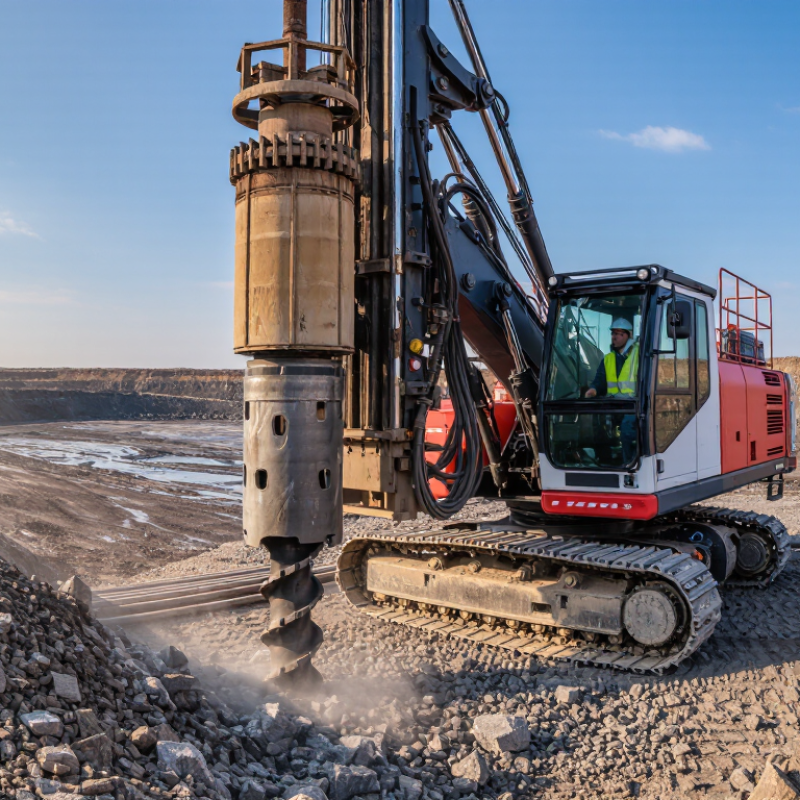
How to Choose a DTH Boring Machine?

Define the Ground Conditions and Drilling Requirements

How to Choose a DTH Boring Machine?

Define the Ground Conditions and Drilling Requirements

Choosing a DTH boring machine starts with the ground, not the catalogue. Soil reports help, but field exposure often reveals the harder truth. Record soil layers, rock strength, fractures, groundwater, and loose overburden before selecting equipment. A short test hole can expose collapsing walls or unexpected clay. That information is more valuable than a general capacity chart. Keep it specific.

Match the machine to the required hole diameter, depth, alignment, and production rate. Hard, massive rock usually demands stable rotation, adequate air pressure, and a hammer suited to the hole size. Fractured rock may need casing support to prevent blockage and wall failure. In wet formations, check compressor performance and water management. Excessive air can carry fines into nearby areas and reduce visibility around the collar. Small details matter. Also consider access width, ground bearing capacity, mast clearance, and noise limits.

Ask operators to inspect rods, threads, seals, and the flushing system daily. Measure penetration rate and air pressure during the first shift, then compare results with the drilling plan. If performance drops, do not blame the hammer immediately. Worn bits, poor alignment, or unstable ground may be responsible.

I have seen production estimates fail because groundwater was treated as a minor issue. That assumption deserves challenge. A cautious selection may feel slower, yet it can reduce stuck tooling, downtime, and unnecessary hole enlargement.

Compare DTH Boring Machine Types and Operating Methods

How to Choose a DTH Boring Machine?

Choosing a DTH boring machine starts with the ground, not the brochure. Hard granite needs high impact energy, while fractured rock may require better hole control. Crawler-mounted machines suit uneven sites and confined access. Truck-mounted units move faster between prepared locations. Compact rigs work well near buildings, but their smaller compressors can reduce drilling speed.

Operating method also changes the right machine. Straight drilling is suitable for vertical foundations, anchors, and water wells. Angled drilling needs a rigid feed beam and accurate positioning. Casing-through drilling helps stabilize loose layers, although it increases fuel and tooling costs.

Air flushing removes cuttings efficiently in dry rock. Water or foam can improve dust control, but excess fluid may weaken unstable ground. Hole diameter, depth, compressor pressure, and rod size must match each other. A common mistake is choosing power first and checking access later.

Tips: Check the rock report, working height, transport route, and local dust rules before purchase. Ask operators to inspect the feed, hoses, and drill bits daily. Keep records of penetration rate, pressure, and fuel use. These details reveal problems earlier than noise alone. No machine is perfect. Some specifications look impressive but perform poorly in broken rock. Test conditions should resemble the real site, or the comparison may mislead.

Evaluate Key Machine Specifications and Compatibility

Choosing a DTH boring machine starts with matching specifications to the actual drilling site. Check the required hole diameter and depth first. A machine designed for shallow utility work may struggle in deeper formations. For rocky ground, review rotation torque, feed force, and hammer capacity. These figures should support the planned bit size, not merely look impressive on paper.

Air performance is equally important. Compare compressor pressure and airflow with the hammer manufacturer’s working range. Insufficient airflow can reduce penetration and leave cuttings inside the hole. Excessive pressure may increase wear and operating costs. Confirm the machine accepts your available drill rods, couplings, and bit shanks. Small mismatches can cause delays.

Mobility also affects compatibility. Measure the access route, including gates, slopes, and overhead clearance. A compact rig may be more useful than a powerful machine that cannot reach the work area. Check engine output, fuel use, dust control, and service access during a site inspection. Field experience shows that maintenance space is often underestimated. Specifications can mislead. Ask for test records, operating limits, and verified performance data. Then compare them with your soil report and crew skills. My own selection process would include a trial hole, because real ground conditions often expose assumptions that brochures do not.

How to Choose a DTH Boring Machine? - Evaluate Key Machine Specifications and Compatibility
Evaluation Dimension Compact DTH Machine Standard DTH Machine Heavy-Duty DTH Machine Selection Guidance
Typical Application Small water wells, anchor holes, construction sites with restricted access Water wells, quarrying, foundation work and general site drilling Deep wells, large-diameter production drilling, mining and major infrastructure projects Match the machine category to the required hole size, depth, ground conditions and working space.
Recommended Hole Diameter 90–165 mm 115–254 mm 165–406 mm Choose a machine whose operating range covers the required final hole diameter, not only the pilot-hole size.
Typical Maximum Drilling Depth 50–150 m 100–250 m 200–500 m or more Depth depends on rock strength, rod diameter, flushing efficiency, hole deviation and the selected hammer.
Suitable Rock Conditions Soft to medium rock, weathered formations and mixed ground Medium to hard rock, including granite, limestone and sandstone Hard and abrasive rock formations requiring high-impact energy and continuous flushing DTH drilling is generally most effective in competent rock; loose overburden may require casing or another drilling method.
Suggested Rock Strength Range Approximately 20–100 MPa uniaxial compressive strength Approximately 40–180 MPa uniaxial compressive strength Approximately 60–250 MPa uniaxial compressive strength These are practical reference ranges. Actual performance varies with bit design, hammer energy, abrasiveness and jointing.
Required Air Pressure 0.7–1.2 MPa 0.8–1.7 MPa 1.0–2.4 MPa Verify that the compressor can continuously deliver the pressure required by the selected DTH hammer.
Typical Air Flow Requirement 10–20 m³/min 15–35 m³/min 25–60 m³/min Compressor capacity must be checked at working pressure, because free-air delivery decreases as pressure rises.
Recommended Hammer Size 3–5 in (76–127 mm) 4–8 in (102–203 mm) 6–12 in (152–305 mm) Select the hammer according to hole diameter, required penetration rate, air supply and formation hardness.
Drill Rod Diameter 60–89 mm 76–114 mm 89–140 mm Rod diameter should provide adequate bending strength and airflow without exceeding the mast or rotation-head limits.
Rotary Torque 1,500–5,000 N·m 3,000–12,000 N·m 8,000–30,000 N·m Higher torque helps start large bits and manage resistance, but excessive torque can increase rod and coupling wear.
Rotation Speed 30–100 rpm 20–80 rpm 10–60 rpm Lower speeds are commonly used with larger bits and hard rock; the correct speed depends on bit type and formation.
Feed Force 15–40 kN 25–80 kN 50–150 kN Feed force must be sufficient to maintain bit contact without overloading the hammer, bit or drill string.
Engine Power 45–90 kW 75–180 kW 150–350 kW Allow additional power for hydraulic systems, dust control, compressor loading, inclination and high-altitude operation.
Mast Stroke 2.5–4.5 m 3.0–6.0 m 4.5–9.0 m A longer stroke reduces the number of rod connections, while a shorter mast may be better for low-clearance sites.
Machine Mobility Rubber crawler or compact crawler; suitable for narrow access routes Crawler-mounted; suitable for uneven construction and quarry terrain Heavy crawler or truck-mounted; requires stronger roads and larger working areas Check transport width, total weight, ground clearance, gradeability and turning radius before purchase.
Typical Transport Width 1.5–2.2 m 2.2–3.0 m 2.8–3.6 m Measure gates, access roads, tunnel entrances and temporary bridges rather than relying only on site estimates.
Dust and Cuttings Removal Air flushing with basic dust suppression Air flushing with dust collector or water injection options High-capacity flushing, dust collection and optional foam or mist systems For populated or enclosed areas, prioritize dust-control equipment and verify local environmental requirements.
Casing Compatibility Optional casing advancement for unstable shallow formations Compatible with common casing systems and casing shoes Supports larger casing systems for deep or unstable boreholes Confirm casing diameter, casing method, available torque and whether simultaneous drilling and casing is required.
Power Supply Compatibility Diesel-hydraulic or electric-hydraulic configuration Diesel-hydraulic configuration; electric options for fixed sites High-capacity diesel-hydraulic or fixed electric configuration Compare fuel availability, electrical connection capacity, ventilation requirements and operating-cost targets.
Best Choice When Use the smallest machine that meets all technical requirements to reduce transport, fuel and maintenance costs.
Main Risk of Oversizing Limited capacity for deep or large-diameter drilling Higher purchase and operating cost than necessary for small projects High capital cost, difficult transport, greater fuel use and increased ground pressure Do not select a machine solely by maximum depth; verify the complete system compatibility.
Compatibility Checks Before Purchase Confirm hammer air consumption, compressor pressure and flow, rod and coupling dimensions, bit diameter, rotation torque, feed force, mast stroke, casing system, dust-control equipment, transport limits, local power or fuel availability, spare-parts support and operator training.
Note: The figures are practical engineering reference ranges for generic DTH boring-machine categories. Final selection should be confirmed using the actual geological report, borehole design, compressor performance curve, tooling requirements and site access conditions.

Assess Power, Mobility, Maintenance, and Safety Features

How to Choose a DTH Boring Machine?

Power should match the ground, hole diameter, and drilling depth. A machine that lacks compressor capacity may produce slow penetration and frequent bit wear. Check air pressure, air volume, engine output, and rod compatibility together. Do not judge power by engine size alone. In hard rock, stable torque and efficient air delivery matter more than impressive figures. Ask for performance data under conditions similar to your site.

Mobility affects productivity and operator safety. Tracks suit uneven ground, while compact frames work better in restricted spaces. Examine ground clearance, turning radius, climbing ability, and setup time. Maintenance also deserves close attention. Inspect access to filters, lubrication points, hydraulic lines, and dust-control parts. Daily checks should be practical, not a chore that gets skipped. A common mistake is choosing a powerful machine that is difficult to service. That decision can become expensive. No checklist is perfect, and site conditions can change quickly.

Tips: Test the machine on representative ground when possible. Confirm emergency stops, guarding, lighting, braking, and operator visibility. Check whether dust suppression works near the drill point. Keep spare wear parts available, but do not store them carelessly. Review maintenance records before purchase. If service support is slow or unclear, reconsider the machine. A safe design should reduce mistakes, not depend on perfect attention every hour.

How to Choose a DTH Boring Machine?

Assess power, mobility, maintenance, and safety features before selecting equipment for a drilling project.

The chart uses practical screening weights for a procurement review. Power reflects drilling capacity and compressor demand; mobility covers access, transport, and setup; maintenance considers serviceability and downtime; safety includes guarding, emergency controls, dust suppression, and operator protection. Final selection should be verified against ground conditions, hole diameter, depth, access limits, and local safety requirements.

Choose a Machine Based on Cost, Support, and Long-Term Value

Choosing a DTH boring machine should begin with total cost, not the purchase price. A cheaper unit may consume more fuel, drill rods, and replacement parts. Calculate expected drilling meters per shift, compressor demand, maintenance intervals, and operator training costs. Ask for service records from similar projects. Numbers from a brochure are not enough.

Support becomes valuable when dust fills the work area and production stops. Confirm spare-part availability, technician response times, warranty limits, and training arrangements before signing an order. A reliable supplier should explain routine servicing clearly, including lubrication points, hammer inspection, and air-pressure checks. I once underestimated delivery delays for a small replacement part. That mistake cost more than the part itself.

Long-term value depends on how the machine performs in your actual ground conditions. Compare penetration rates in hard rock, fractured layers, and changing moisture levels. Check whether the control system is easy to understand after a long shift. Operator fatigue matters. So does repair access.

Do not overbuy.

A larger machine can increase output, but it may also require a stronger compressor, wider transport access, and more experienced operators. Request a realistic ownership estimate over three to five years. Include resale value, downtime, fuel use, and common wear components. If the supplier avoids detailed answers, treat that uncertainty as a cost.