
What Is the Best Sealing Compound Manufacturer in China?
Choosing the best Sealing Compound manufacturer in China requires more than comparing prices. Product consistency matters.
Fortune Business Insights valued the global sealants market at approximately USD 8.44 billion in 2023. It projects continued growth through 2032, driven by construction, automotive, electronics, and renewable-energy applications. Grand View Research also identifies performance, durability, and application technology as major market priorities. These figures show strong demand, but they do not prove that every supplier is reliable.
Dr. George Wypych, a recognized polymer-materials author, has emphasized: “Sealant performance depends on formulation, application, and service conditions.” That principle is practical. A compound used around glass needs different flexibility from one exposed to engine heat or outdoor moisture.
A dependable Chinese manufacturer should provide batch records, technical data sheets, safety documentation, and clear curing specifications. ISO 9001 certification is useful, but certification alone is not enough. Ask for substrate-compatibility testing, aging results, viscosity control, and samples from multiple production batches. Touch the cured bead. Check its elasticity, adhesion, surface finish, and odor.
Factory experience also matters. A supplier serving construction may not understand electronic encapsulation. A low quotation can hide weak testing or inconsistent raw materials. That is where many evaluations become too simple.
No ranking is perfect. The best choice depends on your substrate, temperature range, curing speed, packaging needs, and target market. This guide compares Chinese manufacturers through technical evidence, production experience, quality controls, and customer support—not promotional claims alone.
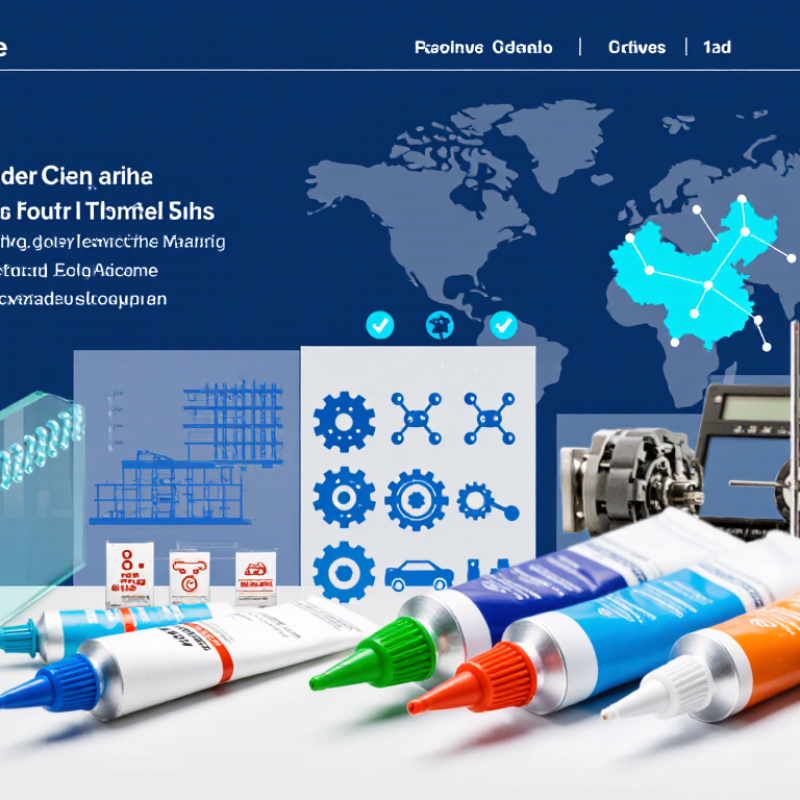
Definition and Role of Sealing Compounds in Modern Manufacturing
In modern manufacturing, sealing compounds are engineered materials that close gaps between joined surfaces. They block water, air, dust, chemicals, and process fluids. Unlike simple adhesives, many compounds remain flexible after curing. This flexibility helps absorb vibration, thermal expansion, and slight movement between components. In practical production, the sealant may be applied as a paste, liquid, tape, or preformed gasket.
Sealing compounds support product safety and service life. They protect electrical housings from moisture and help prevent corrosion around metal joints. In pumps, engines, pipes, and industrial equipment, they also reduce leakage and pressure loss. Selecting the right chemistry requires attention to temperature, curing time, surface condition, and chemical exposure. A compound that performs well on aluminum may fail on coated steel. Small details matter.
When evaluating a sealing compound manufacturer in China, buyers should examine formulation control, testing records, batch traceability, and technical support. Reliable manufacturers should provide clear data on hardness, tensile strength, elongation, adhesion, and operating temperature. Factory experience matters too. Ask for application samples, production photographs, and inspection procedures. A serious supplier should explain limitations, not promise universal performance. That is where many comparisons become imperfect. Laboratory results can differ from factory conditions, especially when surfaces are oily or poorly prepared. I would test a small production batch before approving full-scale use.
What Is the Best Sealing Compound Manufacturer in China? - Definition and Role of Sealing Compounds in Modern Manufacturing
| Sealing Compound Type | Definition and Curing Method | Typical Service Temperature | Main Strengths | Common Limitations | Typical Manufacturing Applications | Key Selection Considerations |
|---|---|---|---|---|---|---|
| Silicone Sealant | Flexible elastomeric sealant that cures through moisture or chemical reaction, depending on formulation. | Approximately −60°C to 200°C | Excellent weather resistance High flexibility Good UV resistance Wide temperature range | Lower resistance to fuels and many hydrocarbon oils; some grades have limited paintability. | Windows, façades, electrical enclosures, lighting assemblies, appliances, and general industrial joints. | Movement capability, substrate adhesion, cure chemistry, primer requirements, and exposure to oils or chemicals. |
| Polyurethane Sealant | Elastic polymer sealant commonly cured by reacting with atmospheric moisture. | Approximately −40°C to 90°C | Strong adhesion Good abrasion resistance Paintable in many grades High elasticity | Generally less resistant to prolonged UV exposure and high temperatures than silicone; moisture conditions can affect curing. | Automotive body joints, transportation equipment, construction joints, machinery housings, and panel bonding. | Required tensile strength, joint movement, humidity during cure, paint compatibility, and resistance to water or chemicals. |
| Polysulfide Sealant | Flexible sealant based on sulfur-containing polymers, typically cured by oxidation or a two-component reaction. | Approximately −50°C to 120°C | Excellent fuel resistance Good water resistance Low gas permeability Durable flexibility | Longer curing time than many one-component sealants; odor and application handling may require controls. | Fuel tanks, aircraft assemblies, insulated glass units, below-grade joints, and chemical-service areas. | Fuel or solvent exposure, cure time, joint geometry, substrate preparation, and required resistance to gas permeation. |
| Acrylic Sealant | Water-based or solvent-based polymer sealant that forms a film as water or solvent evaporates. | Approximately −20°C to 80°C | Easy application Good paintability Low odor options Cost efficient | Usually lower flexibility and water resistance than silicone or polyurethane, especially in continuously wet joints. | Interior construction joints, drywall, trim, low-movement gaps, and general maintenance work. | Indoor or outdoor exposure, expected joint movement, humidity, paint system, and substrate porosity. |
| Butyl Sealant | Viscoelastic sealant based on butyl rubber, available as tapes, preformed strips, or non-curing compounds. | Approximately −40°C to 90°C | Very low water vapor permeability Good adhesion Long open time Useful as a secondary seal | Can remain tacky; limited resistance to high temperatures, solvents, and heavy mechanical movement. | Insulated glass, roofing membranes, vapor barriers, automotive components, and enclosure sealing. | Compression design, temperature exposure, clean-surface adhesion, creep resistance, and vapor-barrier requirements. |
| Epoxy Sealing Compound | Two-component thermosetting resin system that cures through a chemical reaction between resin and hardener. | Approximately −50°C to 150°C, depending on formulation | High mechanical strength Excellent chemical resistance Low shrinkage Strong bonding | Typically rigid after curing; limited suitability for joints with continuous movement or large thermal expansion. | Electrical potting, casting, metal repair, structural bonding, pumps, valves, and industrial equipment protection. | Required hardness, mixing ratio, cure schedule, thermal expansion mismatch, chemical exposure, and service load. |
| Anaerobic Thread Sealant | Liquid resin that cures in the absence of oxygen when confined between close-fitting metal surfaces. | Approximately −55°C to 150°C | Prevents leakage Resists vibration loosening Fills fine threads Clean application | Generally requires active metal surfaces and close-fitting threads; unsuitable for large gaps or many nonmetallic assemblies. | Hydraulic fittings, pneumatic systems, pipe threads, threaded fasteners, pumps, and industrial machinery. | Thread material, gap size, pressure rating, chemical compatibility, disassembly needs, and cure speed. |
| Fluorosilicone Sealant | Silicone-based elastomer modified with fluorinated groups to improve resistance to fuels, oils, and solvents. | Approximately −60°C to 175°C | Fuel resistance Oil resistance Low-temperature flexibility Weather resistance | Higher material cost and more specialized processing requirements than standard silicone sealants. | Aircraft systems, fuel-system components, automotive powertrain assemblies, and aerospace equipment. | Fuel type, solvent exposure, temperature cycling, compression requirements, adhesion, and qualification standards. |
| MS Polymer Sealant | Moisture-curing hybrid polymer sealant combining elastic behavior with broad substrate adhesion. | Approximately −40°C to 100°C | Low odor Good adhesion Paintable grades Isocyanate-free options | Performance varies significantly by formulation; high-temperature and strong-solvent resistance may be below specialized sealants. | Construction, transportation, renewable-energy equipment, metal assemblies, and general industrial sealing. | Paint compatibility, moisture level, movement capability, UV exposure, substrate type, and chemical resistance. |
| Manufacturing Evaluation Criteria | Technical factors used to evaluate a sealing compound and its manufacturing source without relying on brand identity. | Defined by the application | Consistent formulation Batch traceability Quality testing Technical support | A sealant can fail when the selected chemistry, surface preparation, joint design, or curing conditions do not match the application. | Supplier qualification, incoming inspection, production-line dispensing, sealing validation, and failure analysis. | Relevant ISO or ASTM testing, technical data sheets, safety documentation, production capacity, quality controls, and application support. |
Note: Temperature ranges are typical industry values and vary by formulation, curing conditions, joint design, substrate, and exposure environment. Product-specific technical data and compatibility testing should be reviewed before production use.