Weavetech

7 Best RFID Locker Systems for Smart Secure Storage?

Smart storage is no longer just a row of metal doors and keys. In workplaces, campuses, and delivery areas, users expect to collect or store items quickly, with clear access records. A Rfid Locker System can link each compartment to a badge, card, or mobile credential, while software records who opened it and when. The practical difference is easy to picture: fewer shared keys, visible audit trails, and less time spent tracking down a missing parcel. Small details matter.

Industry forecasts help explain the growing interest. Grand View Research estimated the global smart locker market at about US$1.15 billion in 2023 and projected an 11.5% compound annual growth rate from 2024 to 2030. These figures signal investment, not a guarantee that every installation will pay off. Site layout, network reliability, user training, and maintenance still shape results. A locker that fits a brochure may not fit a busy shift change.

This guide compares seven RFID locker systems for secure, practical storage. It considers credential options, management software, integration, durability, and support—not just reader specifications. The right choice depends on the people using it and the items being stored. No single model fits every site. And yes, even good systems need review: access rules can become confusing when nobody owns them.
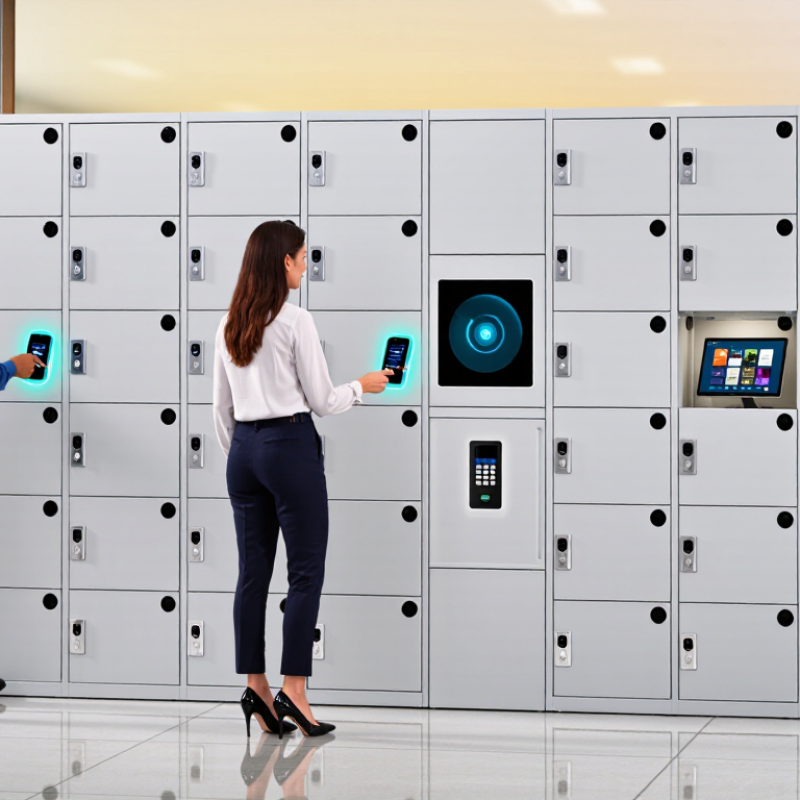
7 Best RFID Locker Systems for Smart Secure Storage?

RFID Locker Systems Explained: Tags, Readers, Antennas, and Access Control

RFID Locker Systems Explained: Tags, Readers, Antennas, and Access Control

A smart locker works through several parts, not a tag alone. Each compartment carries an RFID tag with a unique identifier. A reader sends radio signals, while antennas shape where those signals travel. When a user presents an authorized credential, the access-control system checks permissions and releases the assigned door. The interaction should feel simple: tap, hear a click, open the correct compartment. Placement matters. Metal doors, crowded installations, and nearby antennas can weaken or confuse reads, so installers should test each locker under real operating conditions.

RFID designs differ in range and frequency. High-frequency systems are often suited to close, deliberate taps; ultra-high-frequency systems can read farther, but may need tighter control around adjacent doors. The EPC RFID market report from Grand View Research estimates the market reached USD 14.5 billion in 2023, reflecting broad adoption across industries—not a guarantee that every locker deployment will perform equally well. For secure storage, choose tags that tolerate expected wear, readers with clear feedback, and access software that records events consistently. Test missed reads and accidental neighboring reads before launch. Small details matter. A tag that works on a clean test bench may behave differently on a busy, metal-lined wall.

Market Context: RFID Reached $14.5B in 2022, Grand View Research Reports

Grand View Research reported that the radio-frequency identification (RFID) market reached $14.5 billion in 2022. That figure signals broad commercial adoption, but it does not mean every storage problem needs an RFID system. The market includes many uses beyond lockers. For facility managers, the useful question is narrower: can RFID make access easier to track and manage?

In a busy workplace, a staff member might tap a card, open a locker, and leave without handling a physical key. A system can record access events, while administrators can assign or revoke credentials as needs change. Small details matter. Metal doors, reader placement, and network interruptions can affect performance, so a site assessment is more useful than a headline market figure alone.

The $14.5 billion estimate offers context, not proof that one locker design is best. It also says little about installation costs, maintenance, or user experience at a specific site. Those details deserve attention. Before choosing among RFID locker systems, buyers can test a small installation, check how access records are protected, and ask what happens during a power or connection failure. A pilot may reveal inconvenient truths. That is useful, even when the result is not what a vendor—or a facilities team—expected.

Seven Locker System Types: UHF, HF/NFC, and Hybrid Configurations

A useful locker shortlist starts with the credential and the room. UHF systems read longer distances, which can speed up handoffs across a bank of lockers. HF systems work at close range; users tap a card or badge against a reader. NFC lockers use compatible phones for that same deliberate, near-field interaction. Small detail, big difference.

The seven practical configurations are UHF-only, HF-only, NFC-enabled, dual UHF/HF, UHF with PIN backup, HF/NFC with mobile access, and hybrid systems combining multiple credentials with networked or local control. A hybrid setup can keep doors usable during a network outage, but only if offline rules and later record synchronization are tested. That part is easy to overlook. Check metal-door effects, tag placement, and reader behavior with actual bags and badges before choosing.

Industry growth offers context, not proof that every locker project will succeed. Grand View Research estimated the global RFID market at about $14.5 billion in 2023 and forecast a 11.9% compound annual growth rate from 2024 to 2030. That broad market figure includes many applications beyond lockers. For a credible pilot, measure failed reads, queue time, and support calls across busy and quiet periods. One awkward truth: the most advanced configuration may be harder to maintain than a simpler one.

7 Best RFID Locker Systems for Smart Secure Storage? - Seven Locker System Types: UHF, HF/NFC, and Hybrid Configurations

System type RFID configuration Typical identification method Best suited to Key strengths Considerations
1. UHF item-level locker UHF RFID, commonly based on ISO/IEC 18000-63 (EPC Class 1 Gen 2) UHF tags on items are read by antennas installed in or around compartments. Libraries, tool rooms, uniforms, and shared equipment with tagged items Can identify multiple tags without requiring each item to be presented individually. Metal, liquids, tag placement, and nearby tags can affect read performance; compartment-level tuning and testing are important.
2. HF/NFC credential-access locker HF RFID at 13.56 MHz; NFC-compatible credentials may be used where supported. A person presents a card, key fob, or compatible mobile credential to a reader. Personal storage, staff lockers, campuses, and membership facilities Intentional close-range presentation supports straightforward user access workflows. Credential compatibility depends on the reader, credential technology, and system configuration; NFC support should be verified.
3. Hybrid UHF item tracking + HF/NFC access UHF for item detection, combined with HF/NFC for user authentication Users present a credential; UHF readers detect tagged contents during configured events. Equipment checkout, managed uniforms, and controlled supply storage Separates user identification from item identification, enabling both access control and inventory records. Requires integration between access, item-reading, and software components; test read accuracy in the final enclosure.
4. HF item-level compartment locker HF RFID at 13.56 MHz, with item tags and compartment-mounted readers or antennas Items are detected in a defined compartment or at a presentation point. Small tagged assets, documents, and controlled handover processes Shorter read range can help limit reads to a specific presentation area when properly designed. Usually requires items to be positioned close to the reader; read range and tag orientation vary by installation.
5. UHF shared-access pickup locker UHF identification of tagged parcels or goods, with electronic access control A code, credential, or application authorizes access; UHF can support item presence or collection records. Order pickup, internal mail, and distribution points Can pair convenient collection workflows with automated item identification. RFID does not itself verify a person’s identity or prove collection; access rules and event logging must be configured separately.
6. HF/NFC smart personal locker HF/NFC user credential reader; item-level RFID may not be included. A compatible card, fob, or supported mobile credential unlocks an assigned or shared locker. Offices, gyms, schools, and visitor areas Simple user experience and flexible assignment options when connected to a suitable access-management system. This configuration controls locker access but does not automatically track the contents inside.
7. Multi-technology hybrid locker UHF item identification plus HF/NFC credentials; optional barcode or keypad as an additional access method The system combines credential-based access with item reads and, where configured, a secondary identification method. Sites with varied users, tagged assets, and operational fallback needs Supports different workflows and can provide an alternate way to identify users or items. More technologies increase integration and maintenance complexity; define which method is authoritative for each event.

Selection note: RFID performance depends on tag type and placement, antenna layout, enclosure materials, local radio regulations, and the surrounding environment. Validate the complete locker configuration with representative items and credentials before deployment.

How to Compare Systems: ISO/IEC 18000-63, Read Range, Capacity, and Uptime

Choosing an RFID locker system takes more than checking whether it supports ISO/IEC 18000-63. This standard describes a UHF RFID air interface, but it does not guarantee that every tag will read reliably in every locker. Ask for a live test with the intended tag, door, and stored items. Metal panels, tightly packed parcels, and nearby readers can affect performance. Small details matter.

Read range should match the layout, not just a sales specification. A long range may help staff identify items across a room, while controlled, close-range reads can reduce confusion between neighboring compartments. Compare the system’s capacity against peak demand: count lockers, daily users, and simultaneous transactions. Then check how performance changes when many users tap in during a busy morning. A quiet demo is useful, but it is not a full test.

Tips: Ask for measured read rates with loaded lockers, not empty ones. Request uptime records and clarify what counts as an outage. Check offline procedures, alert response times, and how access is restored after a network failure. These questions can feel overly cautious. They are still worth asking. A system that reads well in a showroom may need adjustment in a real hallway.

Security and Deployment: Encryption, Audit Logs, and Access-Control Standards

A reliable RFID locker system should protect data while it moves between readers, controllers, and management software. Ask whether communications use current encryption protocols and whether stored credentials are encrypted at rest. RFID alone does not guarantee security. A readable card number can still be copied if the system lacks suitable protections. Keep encryption keys separate from everyday administrator accounts, and review how keys are updated when staff roles change.

Audit logs should record who opened each compartment, when access was granted, and whether a door was forced or left ajar. Useful logs include the locker identifier and the action taken, not just a vague “access event.” Set a retention period that fits operational needs, and restrict log access to authorized reviewers. Test these records during a real deployment; a dashboard can look complete while missing events during a network outage. That happens.

Access controls should support individual accounts, role-based permissions, and prompt removal of access for departing staff. Check whether the system can integrate with an organization’s identity tools and align with its chosen security framework, such as ISO 27001 or NIST guidance. These references help structure review; they are not proof that a product is certified. Document network requirements, fallback procedures, and responsibility for updates before installation. Some details get overlooked. That is worth fixing early.

RFID Locker Security: Common Encryption Key Sizes

Key length in bits for widely used symmetric and public-key algorithms. These values describe key sizes, not equivalent security strength.

For locker deployments, use current, standards-based cryptographic protocols and configure them according to organizational security requirements. Key size alone does not establish that a system is secure.